
7 Daily Habits That Help Children Become Better Learners
Picture this: a four-year-old crouched by a puddle, poking at a worm with a stick, asking "but why does it not have legs?" That's not a distraction from learning. That is learning - raw, unscripted, and more powerful than most of us give it credit for.
Children's learning outcomes are shaped not only by what they are taught but also by the routines, relationships, and experiences they encounter every day. Positive daily interactions and supportive environments at home play a critical role in building the brain's capacity for learning.
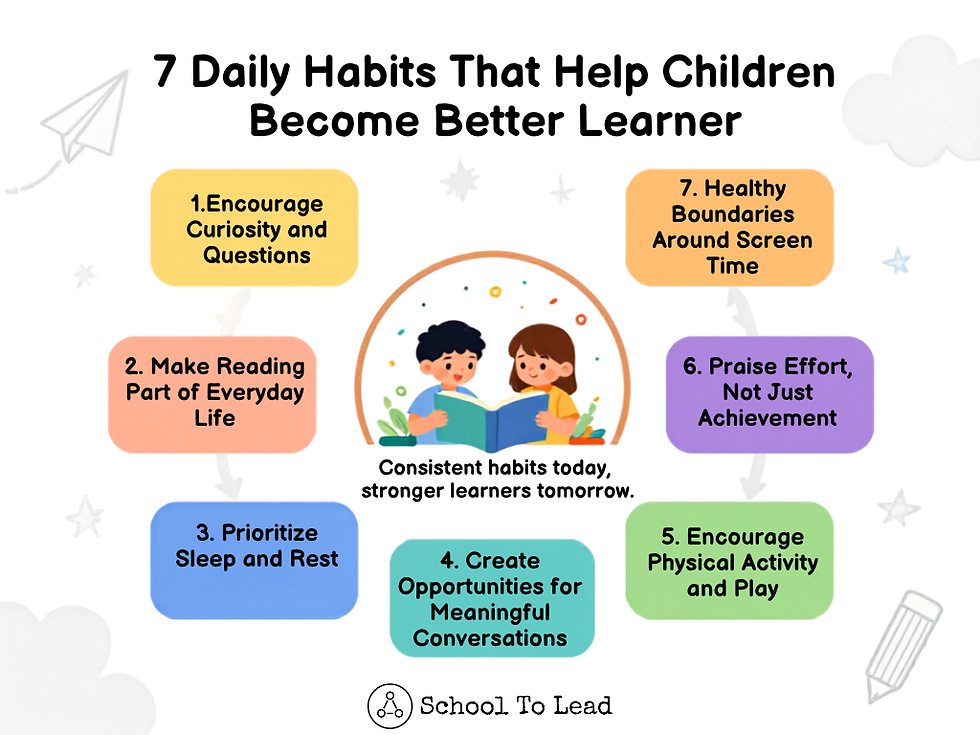
The encouraging part is that helping children become better learners doesn't require expensive resources or complicated strategies. Small, consistent habits practiced at home and in school can have a lasting impact. Here are seven daily habits that can help children develop stronger learning skills and a lifelong love for education.
1. Encourage Curiosity and Questions
Children are naturally curious. They constantly ask questions about how things work, why events happen, and what they observe around them.
Instead of rushing to provide answers, encourage them to explore and think critically. When a child asks a question, turn it into a conversation. Ask what they think first or help them find the answer together. Curiosity drives deeper learning and helps children develop problem-solving skills that extend beyond academics.
Children who feel comfortable asking questions are often more engaged learners because they see education as a process of discovery rather than memorization.
2. Make Reading Part of Everyday Life
Reading remains one of the most effective ways to strengthen learning abilities, improving vocabulary, comprehension, concentration, and communication skills.
In fact, the OECD has found that students who read regularly for enjoyment tend to perform better across various academic subjects - making it one of the simplest daily habits with an outsized payoff.
This habit doesn't have to feel like homework. Reading stories together, discussing books, or even exploring articles on topics that interest children can make reading an enjoyable daily activity that supports long-term learning.
3. Prioritize Sleep and Rest
Learning depends heavily on a healthy and well-rested brain. School-age children generally need between 9 and 12 hours of sleep each night, since this is when the brain processes information, strengthens memory, and prepares for new learning experiences.
Children who consistently get enough rest are generally better able to focus, regulate emotions, and retain information. Establishing regular bedtime routines and reducing screen exposure before sleep can significantly improve learning readiness.
4. Create Opportunities for Meaningful Conversations
Simple conversations can be powerful learning experiences.
Whether during meals, car rides, or walks, talking with children helps them develop language, reasoning, and critical-thinking skills. Open-ended questions encourage children to reflect and express their ideas more clearly.
Questions like "What surprised you today?" or "How would you solve that problem?" help children think beyond simple answers and develop confidence in their own thinking.
These conversations also strengthen emotional connections, creating a supportive environment where learning can flourish.
5. Encourage Physical Activity and Play
Physical movement is closely linked to brain development and learning. Active children often find it easier to concentrate, manage stress, and stay engaged in what they're doing.
Whether it's outdoor play, sports, cycling, dancing, or simply running around with friends, movement helps support both physical health and academic success.
Play is particularly valuable because it encourages creativity, collaboration, and problem-solving in ways that structured lessons sometimes cannot.
6. Praise Effort, Not Just Achievement
Children develop stronger learning habits when they understand that growth comes from effort and persistence. Psychologist Carol Dweck's well-known research on growth mindset shows that children praised for their hard work, rather than their natural ability, are more willing to embrace challenges and learn from mistakes.
Instead of focusing only on grades or outcomes, acknowledge the strategies, determination, and improvement they demonstrate along the way. This helps build resilience and confidence that support lifelong learning.
7. Maintain Healthy Boundaries Around Screen Time
Technology is a valuable part of modern life, but too much screen time can reduce opportunities for activities that support learning, such as reading, play, physical activity, and meaningful conversations.
Simple habits like setting screen-free times, keeping devices away during meals, and encouraging offline activities can help children develop better focus and attention. The goal is not to eliminate screens but to create a healthy balance.
When children spend more time exploring, creating, and interacting with the world around them, they build important skills that support both learning and overall development.
Why These Daily Habits Matter
Many people assume that academic success is determined primarily by classroom instruction. While teachers play an essential role, daily habits often have an equally significant influence on how children learn and grow.
These seven habits help develop curiosity, resilience, communication skills, focus, and confidence - qualities that support success both inside and outside the classroom. The impact of these habits may seem small in the moment, but over time they create a strong foundation for lifelong learning.
Your Next Step Starts Here
Helping children become better learners doesn't require dramatic changes or complicated educational strategies. Consistent habits such as encouraging curiosity, reading regularly, prioritizing sleep, having meaningful conversations, staying active, praising effort, and modeling a love for learning can make a lasting difference.
The most effective learning environments are often built through simple daily actions that nurture children's confidence, motivation, and desire to explore the world around them.
At School to Lead, an education ngo in ahmedabad - we are committed to supporting holistic education that empowers children, families, and educators. Explore our programs and resources to discover how we are helping create learning experiences that inspire growth, curiosity, and lifelong success.
Written by Mahi Bhesaniya for School To Lead

Comments